

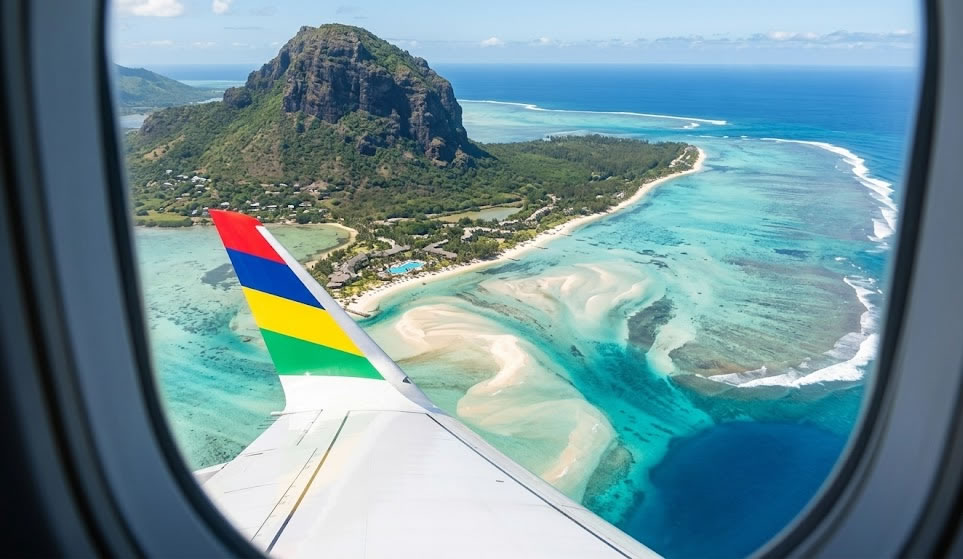


Global events inevitably influence the way people think about travel. In 2026, headlines surrounding tensions in the Middle East and the escalation of conflict involving Iran have prompted many travellers to reconsider long-haul destinations and flight routes. Questions about safety, reliability and ease of travel have become more common, particularly among those planning holidays far from home.
Against this backdrop, Mauritius continues to stand out as one of the most reassuring destinations in the Indian Ocean. The island’s geographic location, long-standing political stability and mature tourism industry all contribute to an environment where visitors can travel with confidence.
One of the most important factors is simple geography. Mauritius lies in the southwestern Indian Ocean, more than 5,000 kilometres from the Middle East. While the current conflict involving Iran has affected parts of that region and occasionally disrupted aviation routes through certain airspaces, Mauritius remains far removed from these tensions.
For travellers, the most noticeable impact of geopolitical instability is often seen in aviation. Several airlines have adjusted flight paths or schedules when passing through sensitive areas of the Middle East. In practice, however, travellers heading to Mauritius often benefit from direct long-haul flights from Europe, which reduce the need to rely on major transit hubs in the Gulf.
Airlines such as British Airways, Air France and Air Mauritius operate direct connections between Europe and the island, allowing travellers to reach Mauritius overnight from cities such as London or Paris. For many visitors, this simplicity makes the journey feel far more predictable and comfortable, particularly during periods when global travel routes are evolving.
Once travellers arrive on the island, Mauritius offers a sense of calm that is often remarked upon by first-time visitors. The country has built its reputation on political stability and peaceful coexistence between cultures. As a democratic republic with a long tradition of stable governance, Mauritius has developed reliable institutions and a well-regulated tourism sector.
Tourism plays a central role in the Mauritian economy, and the island has spent decades refining the infrastructure needed to welcome international visitors. The result is a destination where transport, hospitality and visitor services operate smoothly, supported by experienced professionals across the sector.
Arrival at Sir Seewoosagur Ramgoolam International Airport is generally efficient, and most major resort areas can be reached within an hour or so. Many visitors choose to arrange an airport transfer in Mauritius before arrival, ensuring a straightforward journey to their hotel after an overnight flight.
Beyond the resorts, Mauritius offers an island that is easy to explore and remarkably varied for its size. Lush mountain ranges rise inland, national parks protect large areas of forest and waterfalls, and coral reefs shelter the turquoise lagoons that have become synonymous with the island.
Exploring these landscapes is often part of the appeal of a Mauritius holiday. Some visitors prefer the freedom of car rental in Mauritius, which allows them to travel between beaches, villages and nature reserves at their own pace. Driving distances are relatively short, meaning that a single day can include a coastal swim, a mountain viewpoint and lunch in a local village.
Others prefer to discover the island with local guides who can explain the island’s unique blend of cultures. Organised tours and excursions in Mauritius provide access to historic sites, national parks and traditional communities, offering a deeper understanding of the island’s heritage.
Safety is naturally an important consideration for any long-haul traveller. Mauritius is widely regarded as one of the safest destinations in the Indian Ocean, with relatively low levels of violent crime and a welcoming atmosphere that visitors often notice immediately. As in any destination, basic travel precautions are advisable, but the island has long enjoyed a reputation as a relaxed and comfortable place to visit.
The multicultural character of Mauritian society also contributes to this sense of ease. Influences from Africa, India, China and Europe have shaped a culture that is both diverse and harmonious. Visitors encounter this diversity in everyday life, from local markets and street food to religious festivals and family-run restaurants.
For couples planning honeymoons, families seeking winter sunshine or travellers simply looking for a peaceful escape, Mauritius offers a rare combination of natural beauty and social stability. The island feels remote enough to provide a true sense of escape, yet organised enough to make travelling there straightforward.
In a world where international headlines can sometimes create uncertainty about travel, Mauritius continues to offer something many travellers value deeply: a destination that feels calm, reliable and welcoming, far from the pressures that dominate global news.
Frequently asked questions
Is Mauritius affected by the conflict involving Iran?
No. Mauritius is located in the southwestern Indian Ocean, thousands of kilometres from the Middle East. The island is not involved in the conflict and everyday life continues normally.
Can the Iran conflict affect flights to Mauritius?
In some cases, flights passing through parts of Middle Eastern airspace may be rerouted or adjusted. However, direct flights from Europe to Mauritius continue to operate and remain one of the simplest ways to reach the island.
Is Mauritius considered a safe country for tourists?
Mauritius is widely regarded as one of the safest destinations in the Indian Ocean. The country is politically stable and tourism infrastructure is well developed.
Is it still a good time to visit Mauritius?
Yes. Mauritius remains a year-round destination offering beaches, nature, culture and a reliable tourism sector that continues to welcome travellers from Europe and beyond.