


Exploring Mauritius by car is the best way to see the island, from the rugged cliffs of Gris Gris to the bustling markets of Port Louis. However, the road landscape has changed significantly in 2026. With the full implementation of the Road Traffic (Amendment) Act 2025, enforcement is stricter, fines are higher, and the technology used by the police is more advanced than ever.
If you are planning to rent a car in Mauritius, here is the factual breakdown of what you need to know to stay safe and avoid the “tourist tax” of heavy fines.
1. The Mobile Phone Law: Rs 3,000 Fine
The most common fine for visitors in 2026 is for handheld mobile phone use. The law is very specific: it is illegal to hold a phone for any reason while the engine is running. This includes:
- Checking a map for directions.
- Changing a song on Spotify.
- Holding the phone on speaker while stopped at a red light.
The fine is a fixed Rs 3,000. To stay legal, your phone must be in a dedicated dashboard cradle. If you need to touch the phone, you must pull over safely and turn off the engine. The police are particularly vigilant about this in tourist hubs like Grand Baie, Flic en Flac, and Tamarin.
2. Speeding Penalties (The “Grey Poles”)
Mauritius uses a network of fixed “Photographic Enforcement Devices”—the grey poles you see on the motorways and main roads. These cameras are calibrated to the exact limit posted on the nearest sign. The fines for 2026 are tiered based on how much you exceed the limit:
| Speed Over Limit | Fine Amount |
| Up to 15 km/h over | Rs 2,500 |
| 15 to 25 km/h over | Rs 5,000 |
| More than 25 km/h over | Rs 10,000 |
The “Transition Trap”: Many fines occur where the speed limit drops suddenly (e.g., from 110 km/h to 80 km/h) near roundabouts or junctions. The cameras are often placed precisely at these transition points. Always prioritize the physical roadside signs over what your GPS might say.
3. Police Radars and Handheld Traps
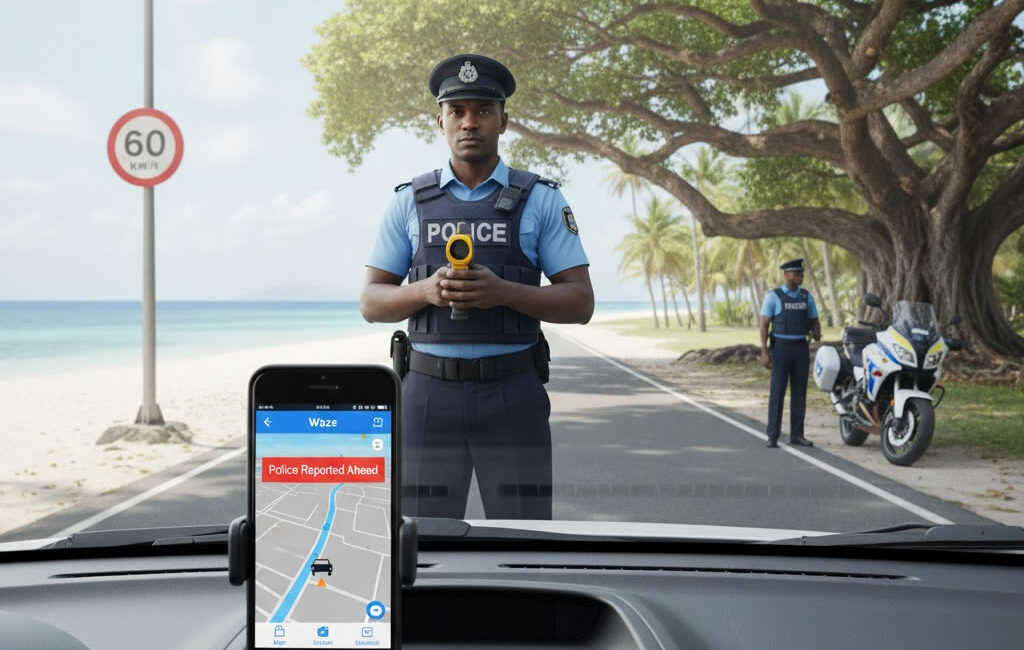
In addition to fixed cameras, the Mauritius Police Force has increased its use of handheld laser radars in 2026. These “mobile traps” are often set up in the shade of trees or behind bus stops just as you enter a village zone where the limit drops to 40 km/h or 60 km/h.
- The Process: If you are flagged by a handheld radar, an officer will signal you to pull over. You will be required to produce your driving license and location de voiture documents.
4. Zero Tolerance: Alcohol and Breathalyzers
The legal blood alcohol limit in Mauritius is among the strictest in the world at 20mg of alcohol per 100ml of blood. For most adults, even a single small beer can put you over this limit.
- Penalties: First-time offenders face a hefty fine and a potential prison sentence.
- Enforcement: Police roadblocks and breathalyzer checks are frequent on Friday and Saturday nights and on public holidays. If you plan to enjoy a drink, always book a private transfer or take a taxi.
5. Seatbelts and Child Safety
It is mandatory for all passengers (front and back) to wear seatbelts at all times. Failure to do so results in an immediate fine. If you are traveling with family, ensure your rental agency provides the correct seating for your children’s age and height.
6. Practical Tips for 2026
- Use Waze: The local driving community is highly active on Waze. It is the most reliable way to receive real-time alerts about mobile police checkpoints and road hazards.
- Keep Left: Remember, we drive on the left. This can be a challenge at the island’s many roundabouts; always give way to traffic coming from your right.
- The “PEDN” Notice: If you are caught by a fixed camera in a rental car, the agency will receive a Photographic Enforcement Device Notice (PEDN). They are legally required to identify the driver. You will then be responsible for the fine, often with an added administration fee from the rental company.
Driving yourself offers incredible freedom, but it requires constant attention to the rules. If you would prefer to see the island without the stress of monitoring speedometers and hunting for signs, we recommend booking a bespoke tour with one of our professional local drivers.
Disclaimer
Note on Regulation Changes: While this guide is based on the Road Traffic (Amendment) Act 2025 and current enforcement protocols by the Mauritius Police Force, traffic laws are subject to periodic updates. The information provided here is for general educational purposes and does not constitute official legal advice. As a visitor, your primary legal responsibility is to follow all posted roadside signage and instructions from traffic officers. Premier Mauritius Holidays and the author are not liable for any fines, penalties, or legal issues resulting from a driver’s failure to comply with local laws. For the most current official information, please consult your car rental provider or the .